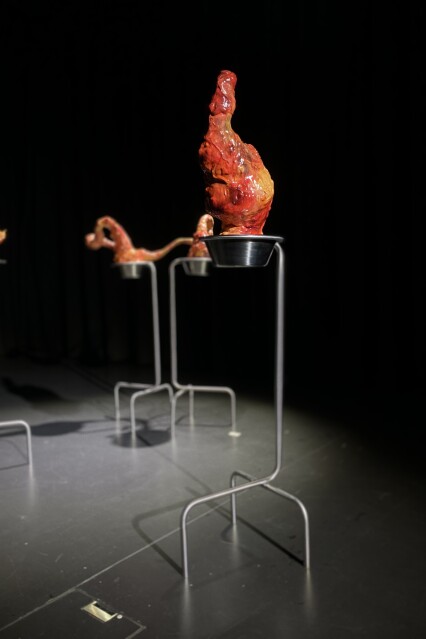
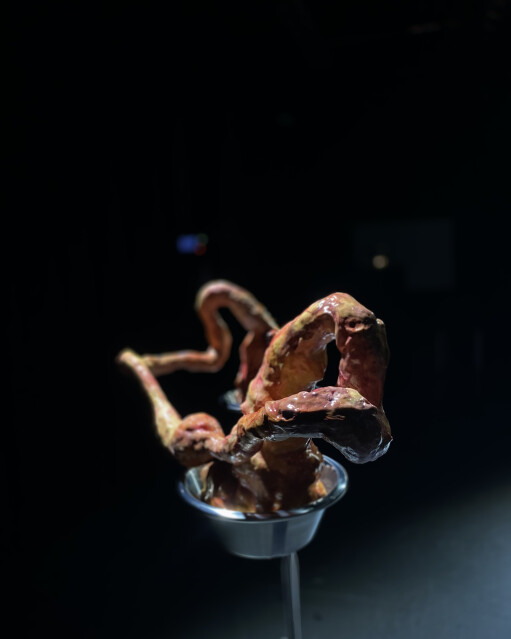
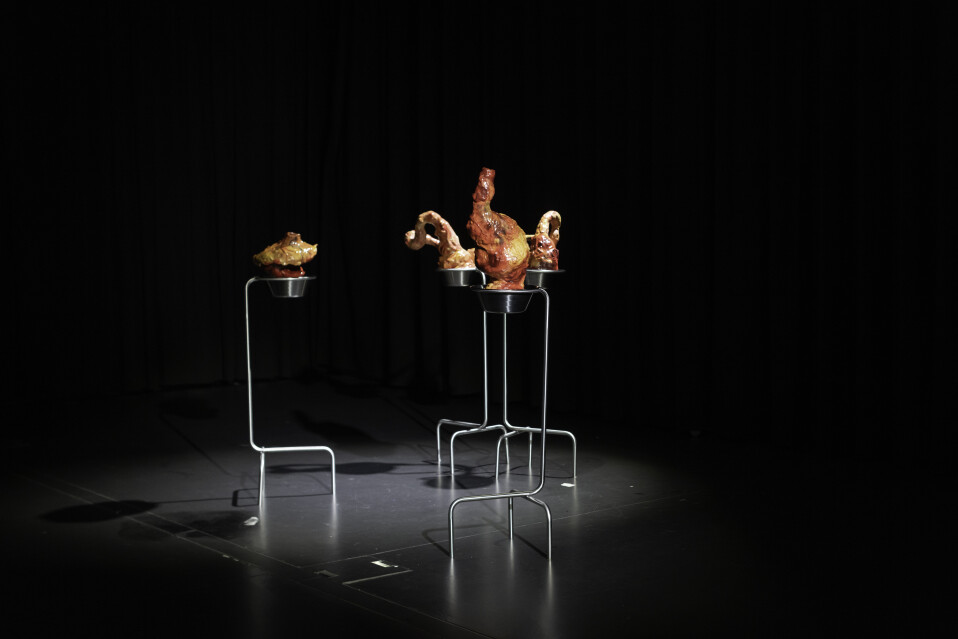
The overlapping layers of wax recall anatomical models and the display of preserved bodies in archaeological collections. Situated between scientific representation and organic materiality, the sculptures resemble anatomical specimens while retaining a distinctly bodily quality. Their lifelike surfaces create a tension between attraction and disgust, drawing attention to bodily processes such as menstruation and childbirth, which are often socially regulated, controlled or tabooed.
Four sculptures, each shaped like a uterus, rest on medical-looking metal stands. To construct these forms, Naomé Nazire Tahmaz (she/her) brings together two contrasting materials: beneath several layers of wax are handwoven baskets that give the sculptures their shape. Drawing on Ursula K. Le Guin’s Carrier Bag Theory, the basket points to practices of gathering, carrying and preserving. These activities can also be understood as forms of care, historically associated with the private sphere and with feminised labour. In 3 wombs, 4 vessels, care and conservation meet as different practices of preserving and sustaining.