Emilia Trog (she/her) works with Diamond Painting, a popular craft in which predefined colour fields are filled with small plastic gems according to a fixed grid. What appears to promise creativity is, in fact, built on rigid repetition and meticulous execution. The square diamond pieces resemble the pixels of a digital image, turning low resolution into a visual principle.
With their glossy, seductive surfaces, Diamond Paintings hover between art and kitsch. They evoke, for instance, the late-capitalist logic of the gimmick: objects designed to capture our attention and promise added value, while carrying their own redundancy within them. Emilia takes this aesthetic as a point of departure for her artistic practice, drawing attention to the processes through which images are translated and come into being. The individual diamond-pixels become a fluid and movable image material, allowing her to trace different gestures and movements across the surface. Digital colour information is reduced, translated into a system of symbols, and finally reassembled on the canvas using individual rhinestones. This makes visible how an image changes as it is translated between digital and material image systems.
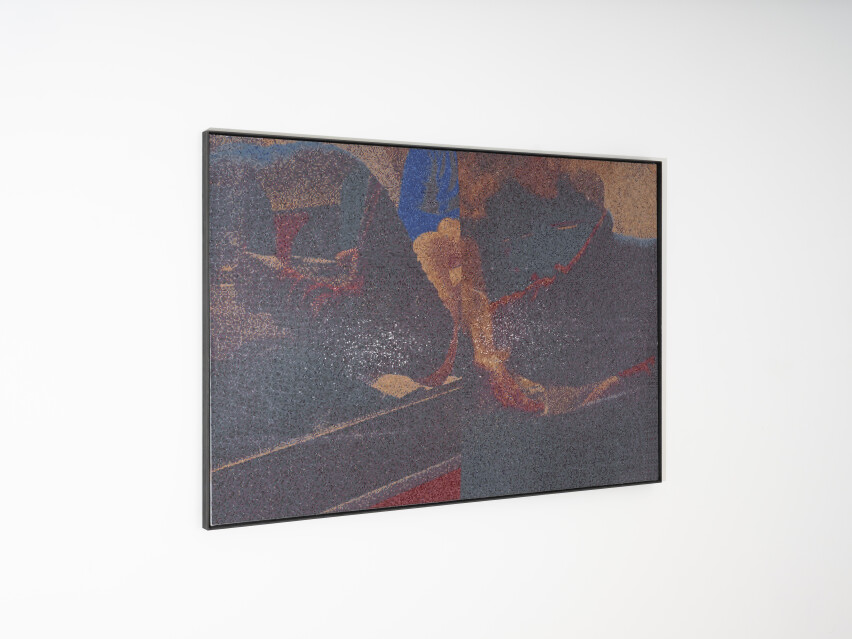
Konkreter Fotorealismus Img. 2 (Personengruppe I+II), 2025.
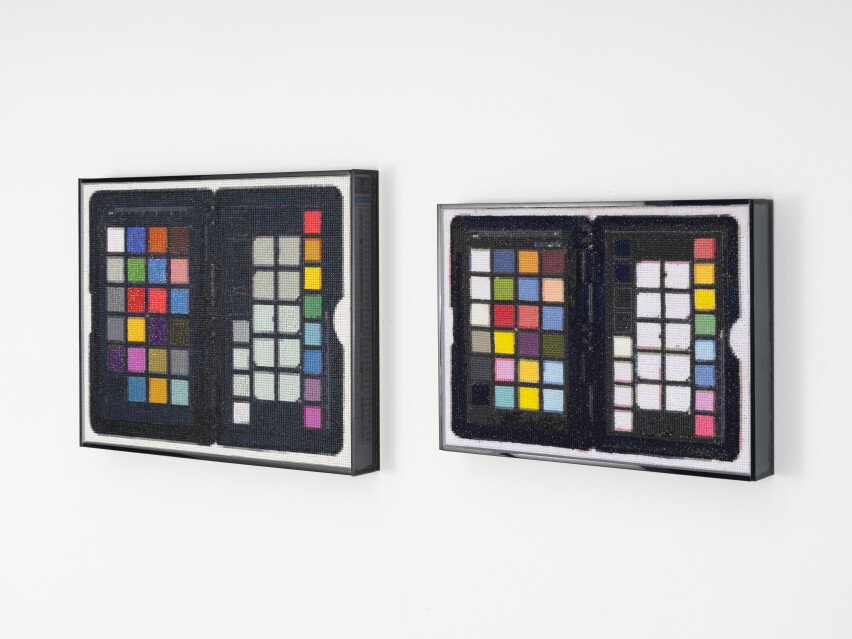
Systematischer Nischenkomplex Variation 4.2.1 und 4.2.2, 2025.
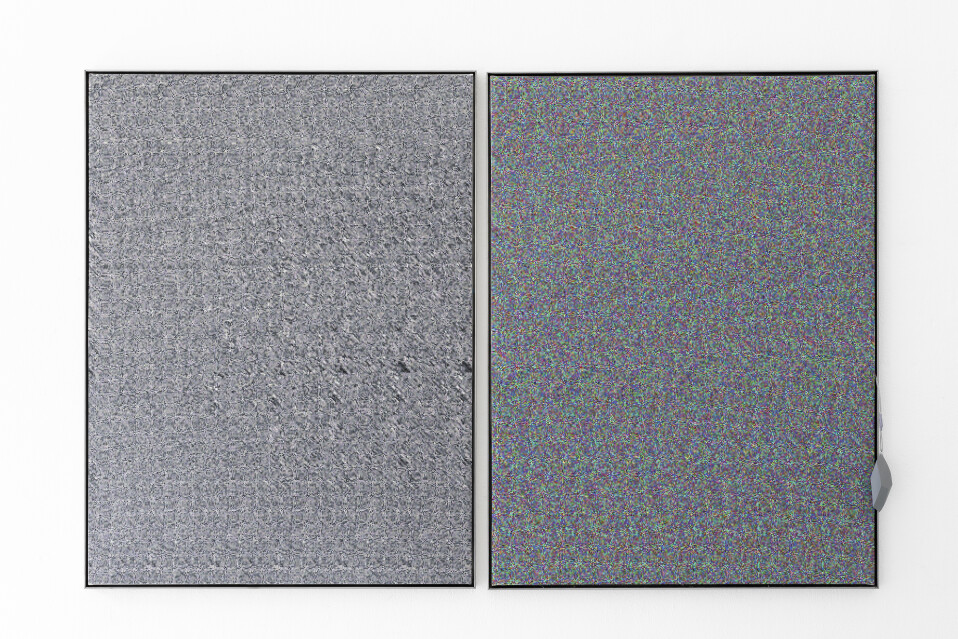
Systematischer Nischenkomplex Variation 4.1.2 und 4.1.1, 2025.

Systematischer Nischenkomplex Variation 4.1.1, 2025. Detail
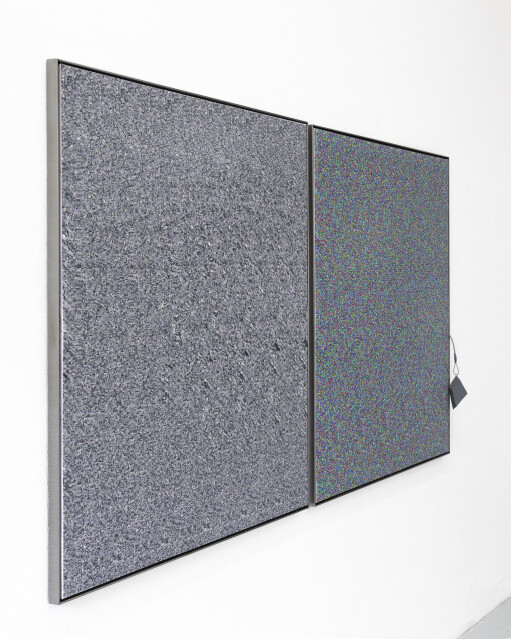
Systematischer Nischenkomplex Variation 4.1.2 und 4.1.1, 2025.